

LBank Listing Cost in 2026
 October 27, 2025
 Updated: June 17 2026, 01:32

LEAVE A REQUEST
Launching your own token project? Our experts are ready to help with listing on exchanges, market making, marketing and other solutions
SUBMIT APPLICATIONLBank listing cost depends on more than the exchange-side fee. Projects also need to plan for liquidity, market making, audits, legal and compliance preparation, marketing, and launch coordination.
This guide explains what usually shapes the cost of listing a token on LBank in 2026, how to separate the listing fee from the full launch budget, and what a project should prepare before starting the discussion.
If you need broader support beyond cost estimation, see our LBank listing service for strategy, exchange communication, launch planning, and post-listing support.
What Is the LBank Listing Cost in 2026?
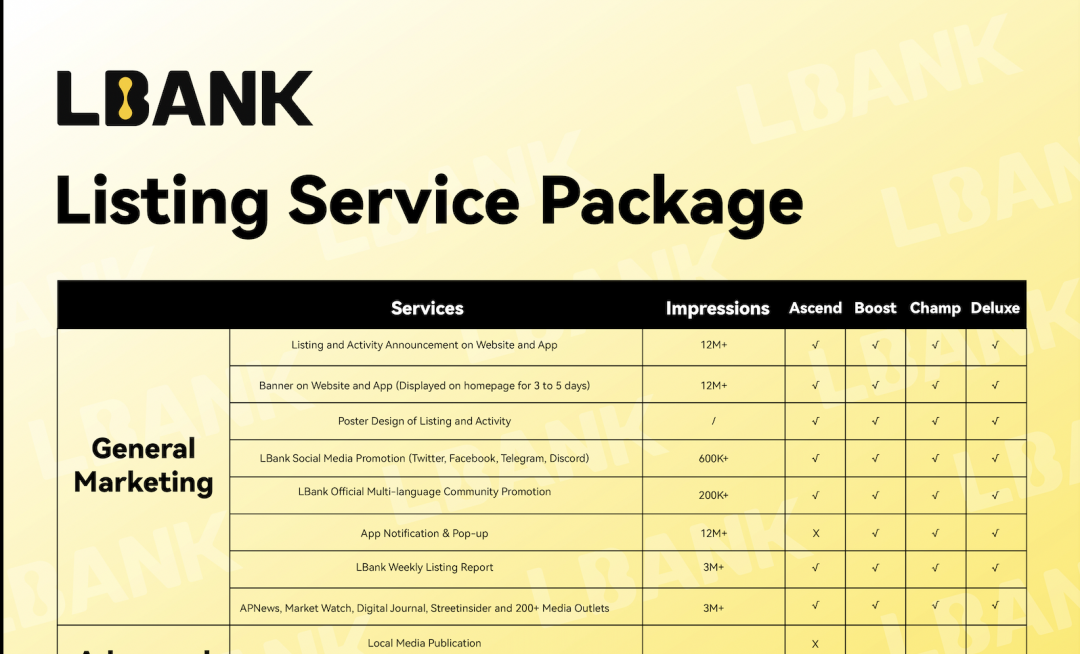
Based on Listing.Help market experience, the LBank listing fee is often discussed in the $20,000-$40,000 range. This is usually the exchange-side part of the budget, not the full cost of launching a token on LBank.
The total launch budget can be higher once liquidity, market making, audits, legal preparation, marketing, and launch coordination are included. The final number depends on the project, listing terms, liquidity targets, market conditions, and the scope of support required.
Before comparing numbers, it is important to separate three terms:
– Listing fee: the exchange-side fee related to evaluation, onboarding, and listing preparation.
– Listing price: the broader amount a project may need to prepare for the full launch, including exchange-side costs, liquidity, market making, audits, legal work, marketing, and coordination.
– Listing cost: the umbrella term people often use when they mean both the direct listing fee and all supporting launch budgets.
Typical supporting budgets may include:
– Liquidity and market making: capital allocation, market making setup, pair strategy, target depth, spreads, and volatility controls.
– Security and compliance: smart contract audits, fixes, KYB/KYC, legal review of the token model, entity structure, and restricted jurisdiction checks.
– Launch Marketing and awareness: PR, KOL campaigns, community activation, listing announcements, trading competitions, and post-listing communication.
What Affects LBank Listing Cost?
LBank listing cost is usually shaped by how ready the project is and how much support is needed before launch. A stronger project package can make the discussion more structured, while missing materials, unclear tokenomics, or weak liquidity planning can increase delays and extra preparation work.
Key factors include:
- Project stage and traction: product status, active users, holders, integrations, community quality, and market demand.
- Tokenomics and vesting: total supply, unlock schedule, allocation logic, utility, emissions, and market risk.
- Audit and technical readiness: smart contract audit, verified fixes, contract address, supported chain, wallet compatibility, and technical documentation.
- Legal and compliance setup: entity details, jurisdiction, founder KYC/KYB, token classification risks, sanctions screening, and restricted markets.
- Liquidity and market making: target pairs, depth, spread control, market-making partner, liquidity reserves, and volatility management.
- Marketing and launch plan: PR, KOLs, community campaign, listing announcement, trading activity, and post-listing support.
LBank-Specific Cost Nuances
LBank can be attractive for projects that need CEX exposure before moving to larger tier-1 exchanges. In many cases, the exchange is considered for retail reach, regional market access, and a more practical listing path than larger venues.
For cost planning, the key point is simple: the exchange-side fee is only one part of the budget. Projects should also prepare liquidity, market making, marketing, and post-listing support before the listing discussion becomes serious.
LBank Listing Requirements (2026 Checklist)
Before applying, prepare:
✅ Project overview and pitch deck.
✅ Whitepaper, roadmap, website, and product information.
✅ Tokenomics, vesting, supply, and utility details.
✅ Smart contract address, supported chain, and audit report.
✅ Legal entity, jurisdiction, and compliance information.
✅ Team background and founder verification details.
✅ Community, traction, holders, users, and market data.
✅ Liquidity and market-making plan.
✅ Launch marketing and post-listing support plan.
For a deeper breakdown of documents, compliance points, tokenomics, audits, liquidity, and review criteria, see the full LBank listing requirements guide.
How LBank Listing Cost Fits Into the Process
The cost discussion usually starts after the project has a clear listing package. If the exchange or listing team has to clarify basic details, the process becomes slower and less predictable.
1. Review project readiness and missing materials.
2. Prepare documentation, tokenomics, audit, legal, and traction data.
3. Discuss listing scope, exchange-side fee, liquidity, market making, and launch support.
4. Align timelines, technical details, and marketing activities.
5. Launch trading and monitor liquidity, spreads, marketing activity, and the next steps in the project’s roadmap.
For a step-by-step process, read the full guide on how to list a token on LBank.
LBank vs. Other Exchanges — Price and Fit
How LBank’s typical fee benchmarks against peers:
| Exchange | Typical Listing Fee | Best Fit |
| Binance | $300K – $800K | Large, de‑risked projects with global scale |
| OKX | $300K – $500K | Growth‑stage projects with strong compliance |
| Bybit | $150K – $250K | DeFi/GameFi tokens and emerging mid‑caps |
| MEXC | $50K – $100K | New and mid‑cap tokens seeking fast liquidity |
| LBank | $20K – $40K | Early‑stage tokens aiming for fast retail reach |
Timeline and Practical Tips
Serious applications typically follow this cadence:
– Week 1–2: Submission acknowledgment and initial screening.
– Week 3–4: Compliance review and clarifications.
– Week 5–6: Technical validation and liquidity setup.
– Week 7+: Listing date coordination and go‑live.


 April 25, 2026