

How to List a Token or Coin on Bitfinex in 2026
 July 28, 2025
 Updated: September 10 2026, 10:30

LEAVE A REQUEST
Launching your own token project? Our experts are ready to help with listing on exchanges, market making, marketing and other solutions
SUBMIT APPLICATIONThe centralized (CEX) crypto exchange Bitfinex ranks among the top 15 in the CoinMarketCap crypto exchange rating with a daily trading volume exceeding $170 million. The platform has added more than 100 tokens and coins available for trading, and the weekly number of users exceeds 60,000.
In this article, we will provide detailed instructions for listing on Bitfinex, answering questions such as how to list a coin on Bitfinex, why you should choose this particular exchange, how to prepare for submission and avoid common mistakes, and how to maintain activity after trading begins.
Projects planning a broader exchange strategy can also explore our CEX listing services.
What Is Bitfinex?
Bitfinex is one of the oldest exchanges, having been launched in 2012. Since then, it has evolved from a simple peer-to-peer (P2P) Bitcoin trading service into a comprehensive platform offering a wide range of advanced tools for traders and investors.
The exchange focuses on user security, high liquidity, and new technologies. Bitfinex is owned by iFinex Inc., the creator of the stablecoin Tether (USDT). This connection significantly strengthens investor and trader confidence in the Bitfinex platform and has a positive effect on liquidity.
Why List on Bitfinex?
The exchange has been operating continuously since 2012 and has already attracted professional market participants who trust the platform. This facilitates the listing of cryptocurrencies on the Bitfinex exchange for mature projects. Thus, the exchange regularly announces the listing of large projects. As a result, listing on Bitfinex exchange is often associated with large ecosystems and recognizable projects. However, this does not mean that the exchange will not allow small projects to be listed. NYM, for example, ranks outside the top 500 cryptocurrencies by market capitalization on CoinMarketCap. This means that even medium-sized projects have a chance of being successfully listed.
What You Need Before Listing
A token listing application on Bitfinex requires a comprehensive set of documents and supporting materials. Projects should be prepared to provide the following information:
- Token name;
- Official project website and social media accounts;
- Link to the whitepaper;
- Network on which the token is launched (e.g., ERC20, TRC20, etc.) or a plan to migrate to another network, if planned shortly;
- Applicant’s contact information;
- Token utility;
- Corporate documents, including legal information about the project and the team;
- Marketing strategy for promoting the project;
- Community metrics that will allow the exchange team to assess how active and engaged the community has become around the project’s product;
- Smart contract audit results from a trusted auditing company;
- Information about partnerships;
- Countries where trading is planned;
- And the reasons for listing.
Providing complete documentation and all required information can help streamline Bitfinex’s review process, minimize follow-up questions, and reduce the risk of rejection.
For a more detailed breakdown of the exchange’s evaluation criteria and project readiness expectations, see our Bitfinex listing requirements guide.
Step-by-Step Bitfinex Listing Guide
Submit the Application
Once you have gathered all the required information, you can submit your listing application through the official application form.
If you work with Listing.Help, you can begin the process sooner. You do not need a complete set of materials at the initial stage – we can review your project and help prepare any missing documentation along the way.
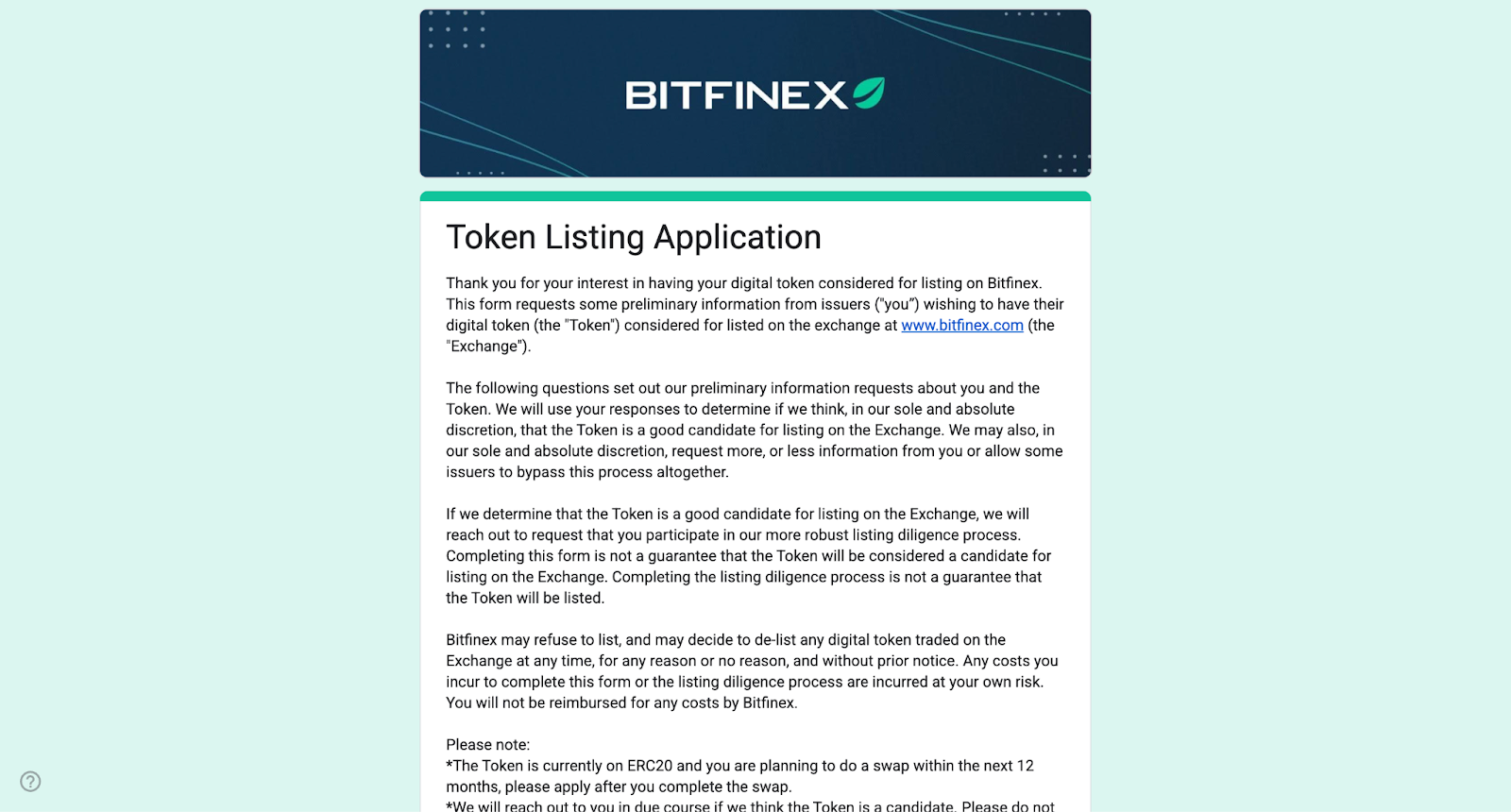
The form should be completed in detail, providing honest and clear information so that the reviewer has no questions. After applying, the exchange team responds to candidates within 6 weeks. To speed up the process, Bitfinex recommends opening a verified corporate account on the exchange.
Bitfinex reviews the project in several stages. Following the initial selection, an in-depth examination of the details ensues. The team checks corporate documents, verifies the identities of team members (KYC), checks compliance with the AML system, the transparency of tokenomics, studies the marketing strategy, whitepaper, and other documents listed in the previous paragraph.
Technical Integration
Bitfinex supports listings across multiple blockchain standards and configurations, including ERC-20, BEP-20, and Solana Program Library (SPL) tokens, as well as multichain deployments and assets issued on their own native networks. After the documents have been verified, the exchange’s technical department becomes involved, integrating the smart contract into the platform and conducting technical tests to ensure the correct operation of deposits, withdrawals, and the order book.
Launch Preparation and Marketing
Following technical integration, the project and the exchange finalize the key listing details, including the trading launch date and time, marketing support from the exchange, and initial liquidity for the trading pair. At this stage, projects should also plan their listing and launch budget. For a detailed breakdown of the expected costs, see our Bitfinex listing cost guide.
Common Mistakes to Avoid
Many newcomers with no prior experience in listing tokens on an exchange often make recurring mistakes. The most common reason for rejection:
1. Inconsistent Project Information
Information in the application should match the project website, tokenomics, technical documentation, and other materials submitted to the exchange.
2. Applying Before Key Issues Are Resolved
Major legal, technical, or token-structure questions should be identified early rather than discovered late in exchange review.
3. Weak Market Preparation
The project should have a realistic approach to liquidity and the market after trading begins, rather than treating the listing itself as the final goal.
4. Slow or Confusing Communication
Delayed, contradictory, or incomplete responses can create additional review cycles and make coordination more difficult.
5. Treating the Listing as a One-Day Launch
Technical preparation, liquidity, marketing, and post-listing management should be planned together before the trading date.
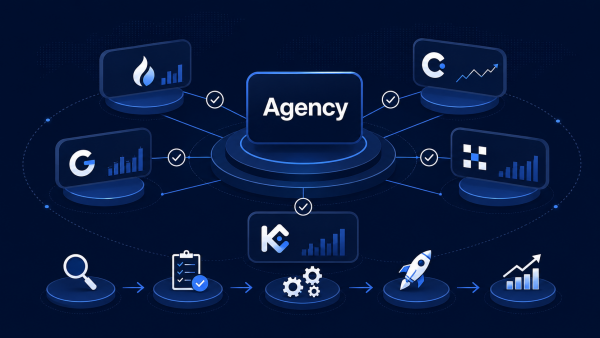
Professional Bitfinex Listing Support by Listing.Help
Listing.Help has worked with 3,000+ clients since 2017 and built direct relationships across 100+ crypto exchanges, including Bitfinex.
We communicate directly with Bitfinex, connect your team with the exchange representatives, and coordinate the listing from the initial discussion through commercial terms, preparation, launch, and post-listing support.
You can contact us at any stage, only your project name and contact details are needed to start.
After Listing — What’s Next?

After successfully listing the token on Bitfinex and launching trading, it is crucial to maintain momentum and continue developing the project and its community. Audience interest can be maintained by creating marketing activities, establishing new partnerships, maintaining sufficient liquidity for comfortable trading, and providing transparent updates.
Such post-listing work helps to put the coin on Bitfinex on a sustainable development trajectory, strengthening the long-term success of the project.
Continue publishing regular roadmap updates, ensure reliable market making support and a healthy order book, keep your community informed about key developments, and strengthen your media presence. These efforts will help build confidence among investors and traders and support the project’s long-term growth.
Final Thoughts
Listing on Bitfinex can give a project access to greater liquidity and strengthen its credibility. However, preparing an application takes time, and mistakes at any stage of the review can turn a process that might take several weeks into one that lasts several months.
A structured approach is the best way to keep the listing process moving efficiently. Prepare all key materials in advance, including your whitepaper, tokenomics, audit reports, legal documentation, and marketing strategy. This ensures that the required information is readily available when you complete the application.
At the same time, avoid rushing the preparation of your whitepaper or tokenomics. Errors and inconsistencies in these materials can lead to additional questions and delay the review. Clear, complete, and transparent information about the project and its token makes it easier for the exchange team to assess the application, improving the chances of a positive outcome and helping the project reach the trading stage sooner.
A successful listing begins with thorough preparation. Learn from the mistakes made by other projects, and if you need support at any stage of the process, contact Listing.Help. Good luck with your listing!


 April 25, 2026