

What Is Zcash (ZEC)?
 June 5, 2026
 Updated: June 5 2026, 12:38

LEAVE A REQUEST
Launching your own token project? Our experts are ready to help with listing on exchanges, market making, marketing and other solutions
SUBMIT APPLICATIONPublic blockchains are transparent by design. That makes them auditable, but it also creates an uncomfortable side effect: anyone can follow an address, inspect its balance, and reconstruct a transaction history. Zcash was built around the idea that digital money should not force every payment into public view.
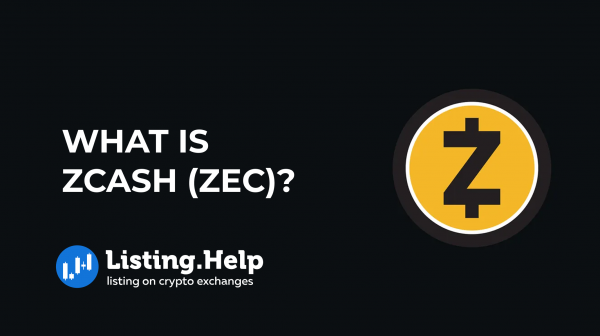
Zcash is a privacy-focused Layer 1 blockchain and ZEC is its native currency. The network lets users choose between transparent transactions and shielded transactions that hide sensitive details while still allowing the blockchain to verify that a payment is valid.
That model has made Zcash one of the most important live applications of zero-knowledge cryptography. It has also kept the project relevant as privacy, surveillance, and compliance become more prominent questions for crypto users and payment infrastructure.
This review explains what Zcash is, how shielded transactions work, what ZEC is used for, and why the protocol remains structurally interesting years after its launch.
What is Zcash?
Zcash is a decentralized peer-to-peer payment network launched in October 2016. It grew out of academic work on private digital cash and was brought to life by Electric Coin Company with a wider group of researchers and contributors. The network uses a Bitcoin-like monetary model but adds a cryptographic privacy layer.
The distinction between Zcash and ZEC is straightforward. Zcash is the protocol and blockchain network. ZEC is the coin transferred on that network. Users can hold ZEC, send it to another wallet, receive payments, or trade it on supported platforms.
Zcash supports transparent and shielded activity. A transparent transfer exposes addresses and amounts on the public ledger, similar to a Bitcoin transaction. A shielded transfer keeps transaction data private while providing cryptographic proof that the payment follows the network rules.
This flexibility is central to the project. Zcash does not assume that every payment has the same privacy requirement. It gives users and applications a way to choose confidentiality when it matters while retaining compatibility paths for services that still rely on transparent flows.
How does Zcash work?
Zcash is a proof-of-work blockchain. Miners validate transactions, add blocks, and receive ZEC through block rewards. The monetary schedule is intentionally close to Bitcoin’s: ZEC has a fixed maximum supply of 21 million coins and periodic halvings reduce new issuance over time.
The privacy layer is what makes the network distinctive. Zcash uses zero-knowledge proofs, a cryptographic method that lets one party prove a statement is true without revealing the underlying information. In a payment context, the network can confirm that a user has the right to spend funds and that no new coins were created without exposing the sender, receiver, or transferred amount.
This is different from simple pseudonymity. On an ordinary public ledger, a wallet address may not show a legal name, but the transaction graph remains visible. Once an address is linked to a person or company, a large amount of financial activity can become easy to trace.
Shielded addresses encrypt that financial information. Network nodes still verify the transaction under the consensus rules, but outside observers do not receive the same public trail of addresses and amounts.
Shielded transactions, Orchard, and Unified Addresses
Zcash privacy has evolved through several generations of shielded technology. The most important recent architecture is Orchard, introduced with Network Upgrade 5 (NU5) in May 2022. Orchard uses the Halo 2 proving system, removing the trusted setup requirement for the newer shielded protocol while creating a stronger foundation for private payments.
NU5 also improved usability through Unified Addresses. A Unified Address can bundle multiple Zcash receiver types into one address format. Supporting wallets can use that format to make shielding easier and route funds toward the best privacy option available.
This matters because privacy tools often fail at the user-experience layer. If people need to understand several address formats, value pools, and migration steps before sending a payment, adoption slows down. Unified Addresses reduce that friction and give wallets more room to handle complexity for the user.
The result is not that every ZEC transaction is automatically private in every context. Wallet support, exchange support, and user choices still matter. The more accurate view is that Zcash provides a mature privacy toolkit and increasingly practical ways to use it.
What is the ZEC coin?
ZEC is the native coin of the Zcash network. It is used for payments, transaction fees, miner rewards, and participation in the broader Zcash economy. Because the network is designed around digital cash, the coin’s main role is simpler than the token models found in many DeFi protocols.
The supply model is also recognizable. ZEC has a maximum supply of 21 million coins, and issuance declines through halvings. This gives the asset a scarcity model similar to Bitcoin while the privacy layer gives it a different practical purpose.
ZEC is listed on many platforms, including Gemini, OKX, Coinbase, and Gate.io. If you are looking to list a token on similar platforms, understanding the listing process and crypto exchange listing fees is essential.
Exchange support deserves a closer look with privacy-focused assets. A platform may list ZEC but support only certain deposit or withdrawal paths. Users who care about shielded balances should check current wallet and exchange capabilities before moving funds.
Why Zcash matters
Zcash matters because financial privacy is not an edge case. Companies do not publish every bank balance, supplier payment, or payroll transfer to the internet. Individuals also have legitimate reasons to keep savings, purchases, and donations private.
Crypto makes the privacy problem more visible because a public transaction graph is easy to inspect at scale. Pseudonymous addresses help only until they are linked to real identities, exchange accounts, payment requests, or public activity. Once that link exists, the ledger can reveal far more than a user intended.
Zcash shows that blockchains do not have to choose between verification and confidentiality. Zero-knowledge proofs let the network enforce valid payments without broadcasting the underlying details. The same broad cryptographic field has influenced newer infrastructure, including zero-knowledge rollups that use proofs to scale blockchain execution.
The project is also a useful case study in how cryptographic research becomes consumer infrastructure. The hard work is not only inventing a proof system. It is improving wallets, address formats, exchange integrations, performance, and user habits until privacy becomes practical.
The privacy and compliance tradeoff
Privacy coins are often discussed as if privacy and compliance cannot coexist. Zcash takes a more nuanced approach. Users can make transparent transfers when public visibility is useful, and the protocol also supports shielded activity for confidentiality.
That flexibility creates tradeoffs. Optional privacy can improve interoperability with exchanges and payment services, but it also means privacy depends on how people use the network. A transparent ZEC transaction does not gain shielded protection merely because it happened on Zcash.
Wallets can make shielded usage easier, and some services support deposits from shielded addresses or withdrawals to them. The exact support varies, so users should treat exchange compatibility as an operational detail to verify rather than assume.
This is a realistic approach to adoption. Privacy technology needs to function in a world where users, wallets, businesses, and regulated platforms have different requirements.
Risks and limitations
Zcash’s strongest feature is also the source of its biggest challenge. Privacy-focused assets face regulatory pressure, inconsistent exchange access, and added integration work. Listing availability can change across jurisdictions even when the protocol itself continues to operate normally.
Optional privacy also requires informed usage. Users need wallets and workflows that support shielding properly. If funds move through transparent addresses or predictable patterns, some activity may remain visible or easier to correlate.
The protocol has a long technical history, which is valuable but complex. Sprout, Sapling, Orchard, transparent addresses, shielded pools, and Unified Addresses represent meaningful improvements over time. They can also be difficult for a casual user to understand without good wallet design.
Finally, ZEC remains a market asset. Its price can move sharply with privacy narratives, exchange policy, regulation, and broader crypto conditions. The technical case for private payments should be evaluated separately from short-term price momentum.
Conclusion
Zcash is a privacy-focused Layer 1 payment network and ZEC is its native coin. The protocol uses zero-knowledge cryptography to verify shielded transactions without exposing sensitive payment details on a public ledger.
Its importance extends beyond one coin. Zcash helped prove that advanced privacy technology could work in a live decentralized network, and later upgrades such as Orchard and Unified Addresses have made the design more practical.
The project still faces real adoption and regulatory constraints. Privacy is optional, integrations vary, and users need compatible wallets and services. Even so, Zcash remains one of the clearest examples of why financial confidentiality belongs in the blockchain conversation.

For more insights and updates on the crypto world, don’t forget to check out our blog at Listing.Help.

 April 25, 2026